
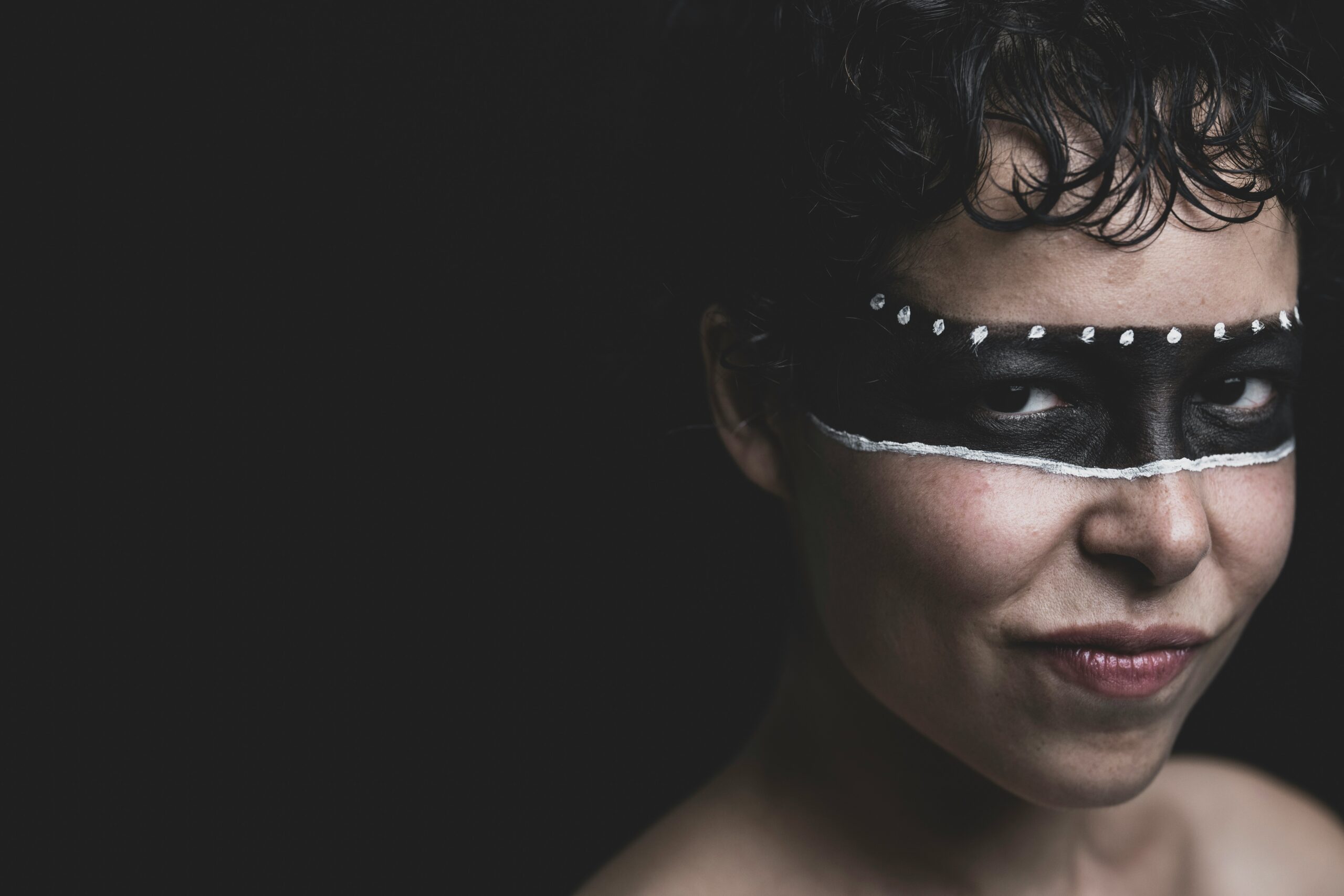
The Invisible Masks We Wear—and the Woman Waiting Underneath
I want to ask you a question. And I don’t want you to answer too quickly.
Who are you when no one needs anything from you?
Not when you’re being a mother, a wife, a daughter, a grandmother, a leader, a business owner, a caregiver or a friend.
And not when you’re solving a problem, helping someone, meeting a deadline, plus holding everything together.
Who are you when no one needs anything at all?
For some women, that question feels surprisingly difficult. Because somewhere along the way, what we do can become so intertwined with who we are that we barely notice the difference.
We become the capable one, the strong one. The one who is always dependable. The one who everyone calls.
And there is nothing wrong with being any of those things. Until we begin believing we must always be them. That’s when a role can quietly become a mask.
When we think of masks, we usually think of hiding. But I don’t believe most of the masks we wear are deliberate attempts to deceive anyone. Quite the opposite. Often, they are adaptations that at some point, helped us.
The strong mask may have appeared because falling apart wasn’t an option.
The perfectionist mask may have earned praise and helped us feel worthy.
The peacemaker mask may have helped us navigate conflict.
The caretaker mask may have given us belonging.
The successful mask may have protected the frightened part of us that wondered whether we were enough.
And the oh so familiar…“I’m fine.”
That one may simply have helped us get through the day.
We don’t need to shame these versions of ourselves. They deserve compassion because they were only trying to help us.
But eventually we need to ask: Is this still who I am—or simply who I learned to be?
There is a particular mask I see many women wear beautifully. Strength. She’s the one who handles it and figures it all out. She’s the one who keeps moving and everyone admires her resilience. And because she’s so capable, people naturally depend upon her. The strange thing about being known as the strong one is that eventually people can forget to ask whether you’re tired.
And sometimes…so do you.
Strength itself isn’t the problem. The problem begins when we believe strength is the only version of ourselves that we’re allowed to show.
Real strength has room for tenderness, uncertainty, help, rest, tears and yes even changing our minds. Real strength is giving ourselves permission to saying: “I can’t carry this today.”
Strength isn’t always holding everything together indefinitely. It’s knowing what we’re finally ready to put down.
And I want you to hold onto this thought for a moment…authenticity doesn’t mean telling everyone everything.
This matters because there is a popular idea that authenticity means being completely open and vulnerable. I don’t believe that. Not everyone has earned access to your tender places. Privacy isn’t dishonesty. Discernment isn’t hiding. Boundaries aren’t masks.
Authenticity means the person you present to the world isn’t continually betraying the person you know yourself to be.
You can be private and authentic. Quiet and authentic. Professional and authentic. Selective and authentic.
The question isn’t: Does everyone know everything about me?
The question is: Am I allowed to know myself?
And what I find most interesting is that we sometimes forget we’re wearing a mask at all. These are the ones we stop recognizing as masks. The ones that say:
- “I’m just the responsible one.”
- “I’ve always been a people pleaser.”
- “That’s just how I am.”
Somewhere along the way, a behavior became an identity. This is why coming home to ourselves requires curiosity rather than judgment.
Instead of asking: What’s wrong with me?
We might ask: When did I learn I needed to be this way?
And then: Do I still need to be?
These are the questions that create space. And once inside that space, something beautiful happens. It’s called CHOICE.
So the next time someone asks: “How are you?”
Try this…notice your response. Because most of us automatically say: “Fine.”
Pause for one second. You don’t have to disclose anything. Simply notice the answer inside you before giving the answer outside you. Maybe you’re genuinely wonderful or maybe you’re tired. Tune into what you are truly feeling whether it’s tender, excited, lonely, hopeful, overwhelmed, content or confused.
By taking that moment for yourself, you’re practicing telling yourself the truth.
Because authenticity doesn’t begin with revealing ourselves to the world. It begins with no longer hiding from ourselves.
At Halloween, we can become a witch, a superhero, a ghost, a movie star—anything we choose. And then the costume comes off. But what about the other costumes? The ones we’ve worn for decades?
- The good girl.
- The achiever.
- The caretaker.
- The strong one.
- The woman who never asks for anything.
Perhaps we don’t need to dramatically tear those costumes away. Maybe we simply need to become curious about what remains when we loosen them. And start asking who’s there underneath? What are her dreams? What does she really want? Who is she when she doesn’t have anything to prove?
I suspect you already know her. Maybe you haven’t heard from her in a while. But she’s still there.
Coming home to ourselves isn’t always about adding something. Sometimes it’s subtraction. It may look like removing expectations, releasing old identities, questioning old stories and putting down roles we’ve outgrown.
Transformation is a process that takes practice, being patient with ourselves and loving persistence until gradually we recognize ourselves again.
Reflection & Practice
If you’re looking to come home to yourself, let it begin with this heart-felt invitation. During this next month find one quiet moment to simply sit with yourself. No distractions, nothing to do or prove just sit and ask: Who am I when no one needs anything from me?
Don’t rush to fill the silence or force anything. Let the answer come up slowly and naturally. Maybe the answer isn’t a title or a role or something you can put on a business card. Maybe the answer is much simpler. I am me.